The most useful 2026 lingerie buying trends are not limited to a seasonal colour, fabric treatment or highly visible silhouette. For independent lingerie retailers, the more durable signals are connected to recurring customer needs: accurate fit, a realistic choice of sizes, comfortable support and products designed for different occasions and life stages.
That distinction matters when shelf space and buying budgets are limited. A trend deserves space in an assortment when it can improve fitting-room conversion, answer a repeated request or create a reason for a customer to return for a familiar fit. This guide translates the wider market direction into practical stocking decisions without treating every headline as a buying instruction.
Why 2026 lingerie buying trends are different from fashion trends?
A fashion trend can attract attention and still have limited value for a boutique assortment. Retail buying trends are more durable: they reflect needs that recur across seasons and customer groups. In 2026, comfort-led design, better fit precision, broader size availability and clearly defined use cases continue to influence what customers expect from lingerie.
A new colour may drive a short burst of interest. By contrast, an unavailable band-and-cup combination, a missing nursing or sports option, or a lack of full-coverage styles can prevent a sale altogether. The practical question is therefore not simply what looks current, but which changes remove friction from the purchase journey and support repeat business.
Four buying priorities shaping lingerie assortments in 2026
the strongest priorities for independent retailers are fit and size precision, a customer-led size range, a balanced category mix and sustained demand for comfortable, supportive construction. Each priority should be tested against local behaviour rather than adopted as a universal rule.
| 2026 buying priority | What it means for a retailer | What to measure |
| Fit and size precision | Treating band, cup and cut as a connected fitting decision | Fitting-room conversion, exchanges and repeated fit questions |
| Customer-led size depth | Expanding around requested sizes instead of widening every style equally | Unavailable-size requests, lost sales and sell-through by size |
| A balanced category mix | Serving everyday, nursing, sports, minimizer and shapewear use cases | Requests by use case, category sell-through and repeat purchases |
| Comfortable support | Prioritising quality fabrics, reliable construction and coverage choice | Try-ons, repeat purchases and reorders of familiar fits |
These priorities are a framework for reviewing an assortment, not a recommendation to stock every possible size or category. Their value comes from comparing them with the behaviour of local customers and the commercial realities of the store.
Start with customer demand, not a generic trend list
The strongest buying signal is repeated customer behaviour. Useful evidence can be found in fitting-room conversations, unavailable-size requests, exchanges, online enquiries, lost sales and the styles customers return to buy again. When the same need appears regularly, it becomes more actionable than a broad market forecast.
A controlled test keeps the assortment responsive without turning every trend into a large upfront commitment:
- Add the band-and-cup combinations immediately outside the current best-selling range.
- Test one missing category with a focused selection of styles and clearly defined use cases.
- Track try-ons, requests, sell-through, exchanges and repeat purchases before expanding further.
- Reorder the sizes and styles that move, while reviewing slow sellers before adding more depth.
This approach creates a simple feedback loop: listen, test, measure and refine. It also gives store teams clearer evidence for the next buying decision and helps separate a genuine customer need from a temporary spike in attention.
Size breadth works best when supported by fitting expertise
A broader size range has commercial value only when customers can be guided towards the right band, cup and cut. Adding sizes without a clear fitting process may increase inventory complexity while leaving the customer experience unchanged. Fit knowledge is what turns size availability into confidence at the point of purchase.
For a smaller boutique, expansion does not have to mean carrying every size in equal depth. A more disciplined method is to begin with frequently requested sizes that are currently unavailable, then use sales and fitting data to determine where deeper stock is justified. The same logic applies to styles: a dependable everyday or full-coverage fit may deserve greater depth than a fashion-led option with a narrower audience.
Category diversification should follow clear use cases
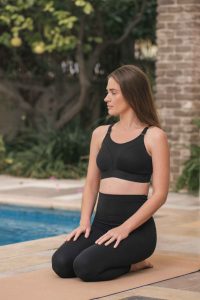
Everyday and push-up bras may form the core of an assortment, but they do not address every customer need. Nursing bras, sports bras, minimizers and shapewear each answer a distinct use case. That makes them useful category extensions when local demand is visible and store teams can explain the benefit clearly.
The aim is not simply to add more product types. It is to identify which need is currently leaving the store unserved. A boutique near fitness studios may see stronger demand for sports bras, while a store with an established maternity customer base may benefit more from nursing styles. Full-coverage and minimizer options may be the more relevant gap elsewhere. The right first expansion depends on the local customer, price positioning, available space and fitting expertise.
Comfort and coverage remain commercial, not merely aesthetic, choices
Comfort is often discussed as a design preference, but for retailers it also affects wear frequency and repeat purchasing. Soft, breathable, quality fabrics; supportive straps; stable bands; considered cup construction and a choice of coverage levels can make a style easier to recommend for everyday use. When the fit is dependable, the customer has a clear reason to return to the same brand or silhouette.
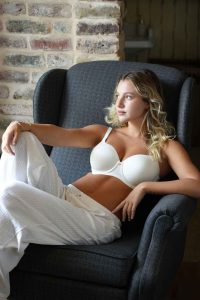
Coverage choice should therefore sit alongside colour and styling in the buying conversation. Full-coverage bras can serve customers seeking confidence, comfort and support without excluding more fashion-led options from the assortment. A balanced range makes it possible to meet different preferences while keeping the buying logic tied to real use.

Where YOU fits into the 2026 assortment?
For more than 25 years, YOU has focused on full-coverage bras that combine comfort, support and wearable design. The collection spans sizes 28A to 44H across Everyday, Push-Up, Minimizer, Nursing, Sport and Shapewear categories. This breadth gives independent retailers a practical way to review both size gaps and use-case gaps within one established range.
The emphasis on precise fit, quality fabrics and consistent construction supports the customer needs behind the 2026 buying priorities. Access to multiple categories through one wholesale relationship can also simplify a focused test: a retailer can begin with the clearest local opportunity, monitor demand and build depth around the sizes and styles that perform.
Frequently asked questions
Is a broader size range worth the shelf space in a small boutique?
It can be, provided the expansion is selective. Start with the sizes immediately outside the current range and the combinations requested most frequently. Sell-through, fitting requests and lost-sales notes can then show where additional depth is commercially justified.
Which lingerie category should a store add first?
Choose the category linked to the clearest unmet use case. Nursing and sports styles are easy to define, while a minimizer or full-coverage everyday range may be more relevant in another store. The best first category is the one supported by repeated local demand and staff fitting knowledge.
How often should an independent retailer review the assortment?
A structured review once or twice a year can set the overall direction, with smaller adjustments based on sell-through, customer requests and seasonal needs. The purpose is to respond to repeated patterns rather than every short-term fashion signal.
Should every store follow the same 2026 lingerie buying trends?
No. Market trends are a starting point, not a fixed buying plan. The final assortment should reflect local customers, available shelf space, price positioning, category expertise and the store’s ability to provide an accurate fitting experience.
Explore the YOU wholesale collection: download the catalogue or contact the team.